In the carbon and advanced graphite industry, high-purity graphite and isostatic graphite are widely used special carbon materials, while many buyers tend to confuse them. It is critical to clarify: high-purity graphite is classified by carbon purity, while isostatic graphite is defined by forming technology. Some isostatic graphite grades also belong to high-purity graphite. This article compares their definition, manufacturing process, core properties and typical applications to support proper material selection.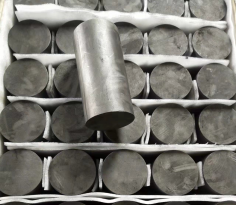
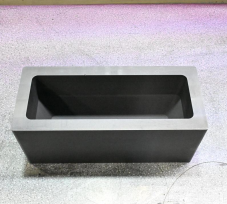
High-Purity Graphite Classification standard based on fixed carbon content. In general industry specification, graphite with fixed carbon ≥99.9% is defined as high-purity graphite. Ultra-high purity grades can reach 99.95% or 99.99%. It is a purity category without restriction on forming methods. It can be produced by extrusion, mould pressing, vibration molding or cold isostatic pressing. Any graphite reaching the carbon purity threshold can be called high-purity graphite.
Isostatic Graphite (CIP Graphite / Cold Isostatic Pressed Graphite) It refers to graphite shaped via Cold Isostatic Pressing (CIP). Graphite powder is sealed in flexible rubber moulds, pressed uniformly by high-pressure fluid from all directions. The green body is then baked, impregnated, graphitized and machined into finished parts. Isostatic graphite can be produced in high, medium or low purity grades, depending on raw material and purification procedures.
Simple summary: Isostatic graphite can be high-purity graphite, but not all high-purity graphite is isostatic graphite.
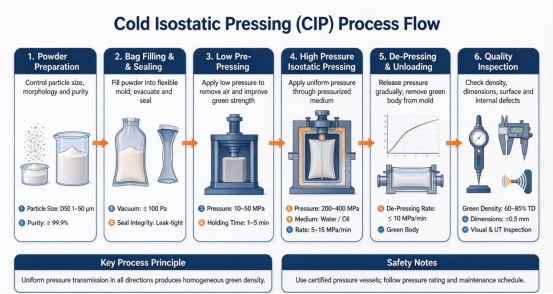
Isostatic pressing process flow diagram
· Isotropy Isostatic graphite features near-isotropic performance. Thermal conductivity, mechanical strength and thermal expansion coefficient show little difference in all directions. Conventional high-purity graphite (extruded or mould-pressed) is obviously anisotropic; properties vary greatly parallel and perpendicular to the pressing direction.
· Density & Internal Structure Isostatic graphite has uniform compact structure with fine, evenly distributed pores. Extruded or moulded high-purity graphite forms oriented grain arrangement. Pore distribution is uneven, and local porosity is more likely to appear.
· Mechanical Strength & Thermal Shock Resistance At the same purity level, isostatic graphite has higher compressive and flexural strength, outstanding thermal shock resistance, and rarely cracks under rapid heating and cooling cycles. Ordinary high-purity graphite has weaker thermal shock resistance and is not recommended for frequent sharp temperature changes.
· Machinability Homogeneous structure makes isostatic graphite suitable for high-precision thin-wall and complex profiles with low chipping risk during CNC machining. Standard moulded high-purity graphite is less stable for precision machining, with higher scrap rate for complicated shapes.
· Cost CIP equipment investment is high, production cycle is long and yield is relatively low. Therefore, isostatic graphite is much more expensive than extruded high-purity graphite of identical purity.
Advantages: cost-effective, stable supply
1. Metallurgy: carburizing agent for steelmaking, furnace lining, melting crucibles, aluminum carbon accessories
2. General EDM electrodes, low-precision graphite moulds
3. Raw material for anode precursor, anti-corrosion packing, graphite heat exchangers for chemical industry
4. Heating and conductive components for conventional high-temperature kilns
Advantages: isotropy, high density, excellent thermal shock resistance, precision machining capability
1. Photovoltaic industry: thermal field parts for monocrystalline silicon pulling, crucibles, insulation barrels and heaters
2. Semiconductor: graphite components for single crystal furnaces, MOCVD trays, fixtures for ion implantation
3. High-end precision EDM electrodes for micro mould machining
4. Nuclear-grade graphite, laboratory high-temperature crucibles
5. Continuous casting moulds, sintering dies for cemented carbide, vacuum heat treatment tooling
1. Choose extruded high-purity graphite if only high carbon purity is required, budget is limited and isotropy is not mandatory.
2. Select high-purity isostatic graphite when the working condition involves repeated thermal cycling, high-precision complex machining and consistent performance in all directions.
3. Confirm three key parameters with your supplier: forming method, fixed carbon purity and grain size, to avoid wrong material selection caused by conceptual confusion.
Driven by photovoltaic, semiconductor and precision manufacturing sectors, demand for special graphite keeps growing. Distinguishing between purity grade and forming process is the foundation of reliable graphite material selection.
Search Blog