1. Electrode Selection Basis
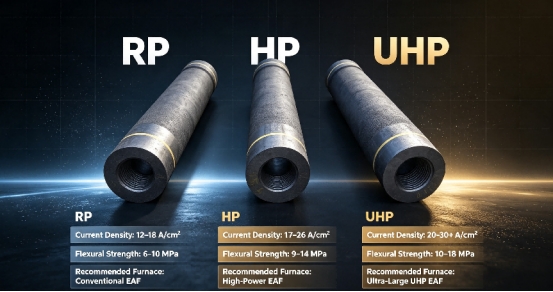
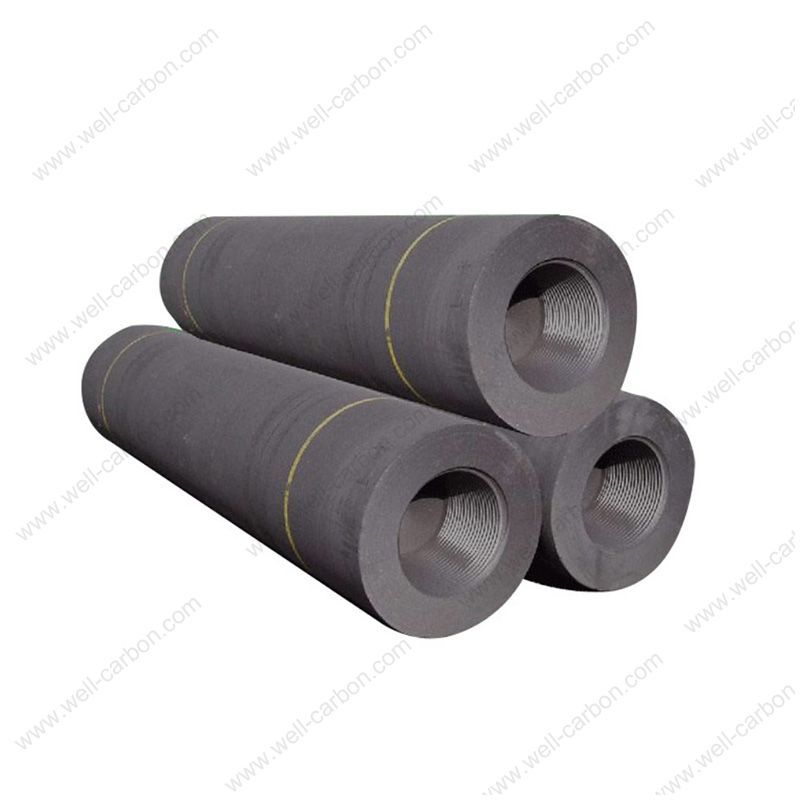
Graphite electrodes are classified into three grades according to their allowable current density and physical properties:
Regular Power (RP): Allowable current density typically 12–18 A/cm², higher electrical resistivity, flexural strength around 6–10 MPa. Suitable for regular power EAFs, refining furnaces, and ferroalloy furnaces with lower secondary voltage and smaller transformer capacity.
High Power (HP): Allowable current density approx. 17–26 A/cm², lower resistivity than RP, flexural strength about 9–14 MPa. Suitable for higher power EAFs and ladle refining furnaces, carrying larger currents with better thermal shock resistance.
Ultra High Power (UHP): Allowable current density approx. 20–30 A/cm² (or higher), the lowest resistivity, flexural strength up to 10–18 MPa. Designed for ultra high power EAFs; they withstand extreme current, temperature and arc shock, and feature lower consumption.
Selection principles:
Determine electrode diameter and grade based on transformer capacity and maximum secondary current. A large UHP furnace must use UHP electrodes; otherwise overheating, excessive consumption and breakage risk increase sharply.
Consider steel grade and process: stainless steel, alloy steel, etc., which need higher temperature and longer arc, tend to require HP or UHP electrodes.
Comprehensive economic evaluation: UHP electrode unit price is higher, but due to better oxidation resistance and break resistance, the total electrode cost per ton of steel is often lower; RP electrodes suit cost sensitive, medium/small furnaces.
2. EAF Operation Precautions
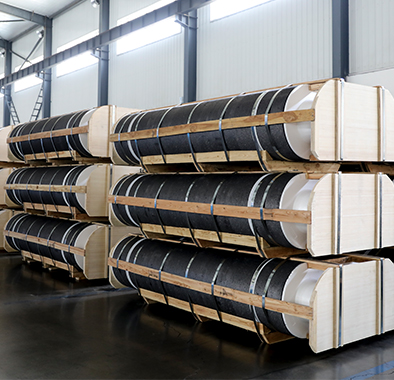
Storage and Drying: Store electrodes in a dry, clean warehouse. If moisture is suspected, low temperature baking (approx. 120–150 °C) is recommended to avoid steam explosion during arc heating.
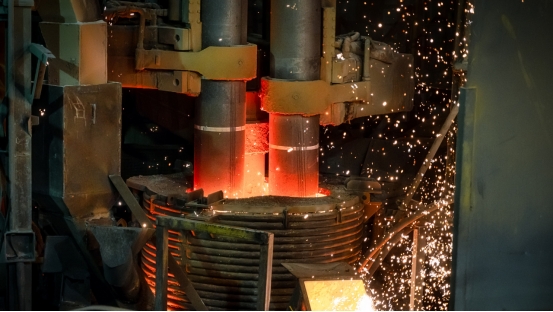
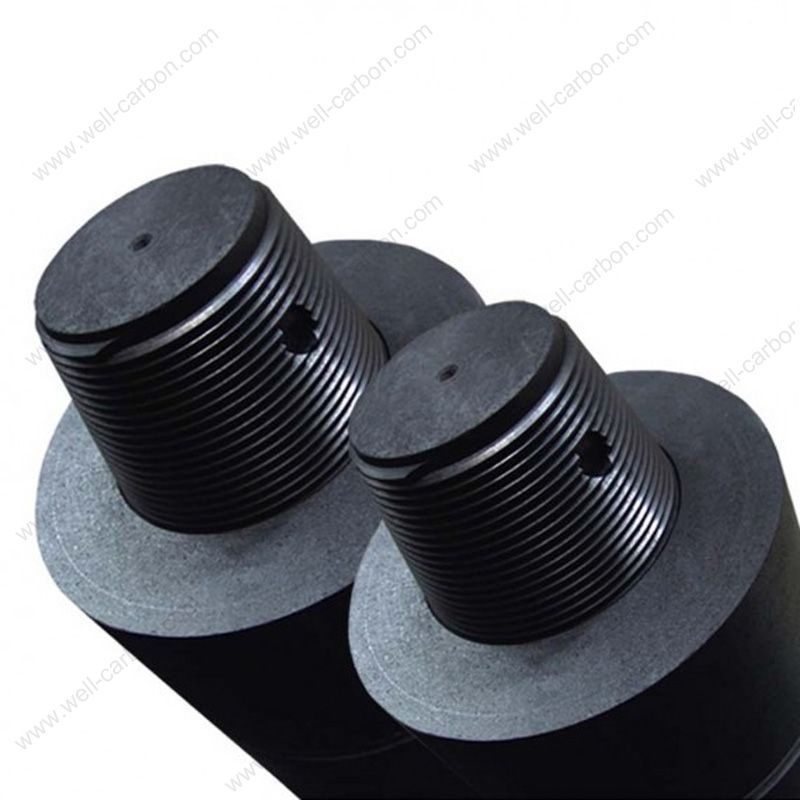
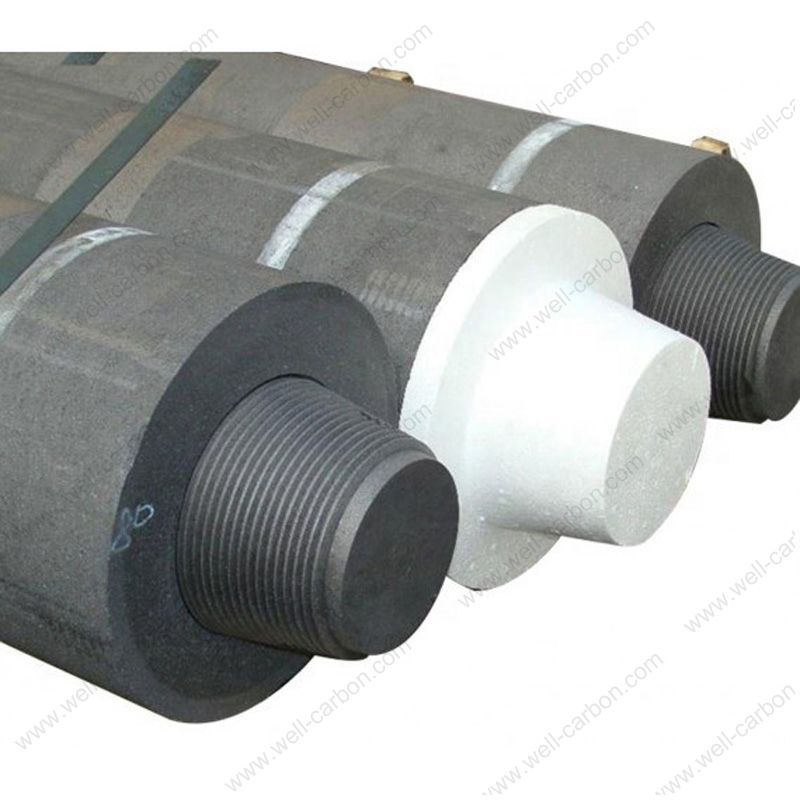
Connection and Torque: Use a calibrated torque wrench and tighten to the manufacturer’s recommended torque. Insufficient torque causes arcing at the joint; over tightening may strip the nipple thread.
Alignment and Clamping: Electrodes must be vertical and centred with the roof hole and clamp. Avoid additional bending stress. Clamp only on the electrode body or protection sleeve, never on the joint.
Lowering and Boring: After charging scrap, lower the electrode slowly to avoid violent impact. Use submerged arc operation during boring stage, covering the arc with foamy slag.
Foamy Slag Practice: Good foamy slag submerges the arc, reduces sidewall oxidation of the electrode, lowers consumption, and improves thermal efficiency. Maintain proper slag basicity and FeO content.
Electrode Regulation: Keep the regulation system responsive; avoid frequent over current trips and electrode breakage. Prevent prolonged short circuit or single phase operation at maximum power.
Cooling and Oxidation Control: Seal the roof electrode port to minimise air in leakage. Ensure water spray cooling does not leak onto the electrode surface, otherwise thermal cracking occurs.
Electrode Joining: When the electrode stub is long enough, clean the thread and nipple, apply joint paste, and screw the new electrode on strictly following torque specifications.
Search Blog